Studio Visit
All of the activities in the studio were engaging, but the most affecting for many of us were the human organs. I agree with other cohort members who said that it felt significant to hold and examine a brain that had actually come from a person.
Real physical artifacts are so powerful for kids, too, and we should seek them out for our students whenever we can. A few years ago, I hoped my students would be interested in a diary from an Oregon Trail emigrant that I borrowed from a friend, so it was really nice to see their amazement and respect for it. The context really helped; we had been working for a few weeks with photos and diary excerpts, which brought the subject down to a more personal level. Anecdotes from diaries on historical websites gave the students a relatable view of daily life and the attitudes and feelings of individual emigrants.
When I brought in the diary written by a man named Dan, we looked at the cover first, which was understandably very beaten up. Then when I opened it up, they could see the beautiful script that some people of that era wrote. The students all gasped. It was a wonderful moment, because as we went through the residency, we could almost always refer back to Dan. The kids felt a connection to him because we had the book that he had carried on the trail, and even though he must have been exhausted at the end of each day of traveling, he wrote in it most days.
When we looked at the human hearts in the studio, there was a personal connection for me. My dad has been dealing with congestive heart failure for quite some time, and one of the hearts we looked at had that same medical issue. I don't understand why, but I didn't feel the slightest bit upset looking at it. My thoughts were more along the lines of understanding better how hard the body can work to adapt itself to its conditions, and how strong human bodies are. I think that, despite my dad having had five heart attacks and three open-heart surgeries, among endless other things, he must be a really tough guy to have withstood all of that, and to have retained his quality of life for the most part.
After his second bi-pass, his surgeon came out and explained to us how it went. It was a pretty rough operation, as there was so much scarring from the previous surgery. He said, "to clear away some of the scar tissue, I lifted his heart..." and he showed with his hands how he had lifted my dad's heart up. We could not stop staring at his hands after that. He had held my dad's heart in his hands!
If we give kids opportunities like the one we had in the studio to learn in such an engaging way, they will probably remember some of those experiences for their whole lives.
Wednesday, August 7, 2013
Monday, August 5, 2013
August 2 Post
Jumpin'
I chose this photo for my entry because it shows a kid who looks engaged cognitively in the head and arms, and also ready to run in the legs and feet!
Today was the first time our cohort did any physical activity together that was lengthy. It seems that the overall mood at the beginning was agitated, but then it calmed down a bit as we focused on what we were supposed to do.
I would guess that many of us had fairly intense experiences while doing this. Our cohort has proven itself to be supportive, but there is also an element of competitiveness.
We will need to discuss the issue of competition with our students. I think competitiveness can be positive or negative. My daughter is very competitive, and the issue of fairness is also important to her. We talk about and practice good sportsmanship when we do things like play badminton, but my goal with her learning to be a good sport is a long-range goal; I don't think she is quite developmentally ready to take on what I now think is a very complex attitude: being a "good sport." It seems that to adopt this attitude you need to have some empathy and awareness of how your own behavior may affect someone else's experience. I think anxiety ("will I be good enough?") can blunt a person's ability to care about what others are feeling, so it would make it even more important that as teachers we involve the students in creating a supportive classroom community.
I chose this photo for my entry because it shows a kid who looks engaged cognitively in the head and arms, and also ready to run in the legs and feet!
Today was the first time our cohort did any physical activity together that was lengthy. It seems that the overall mood at the beginning was agitated, but then it calmed down a bit as we focused on what we were supposed to do.
I would guess that many of us had fairly intense experiences while doing this. Our cohort has proven itself to be supportive, but there is also an element of competitiveness.
We will need to discuss the issue of competition with our students. I think competitiveness can be positive or negative. My daughter is very competitive, and the issue of fairness is also important to her. We talk about and practice good sportsmanship when we do things like play badminton, but my goal with her learning to be a good sport is a long-range goal; I don't think she is quite developmentally ready to take on what I now think is a very complex attitude: being a "good sport." It seems that to adopt this attitude you need to have some empathy and awareness of how your own behavior may affect someone else's experience. I think anxiety ("will I be good enough?") can blunt a person's ability to care about what others are feeling, so it would make it even more important that as teachers we involve the students in creating a supportive classroom community.
Friday, August 2, 2013
Lesson Plans, Micro-teaching, August 1 Post
Lesson planning: learning how to do this is like getting the key to a treasure chest.
I have been reinventing the wheel as an art teacher for a long time. I am lucky enough to have wonderful human resources to call upon for advice about teaching; my best friend is an art specialist, for example. But it's been ridiculously hard to get enough information to suit me.
When I went to the informational talk about the program that Amelia gave, she said, "You will know what you're doing" by the time we finish the fifth quarter. The picture of what this means is gelling for me with every class we take.
I also feel so appreciative of the cohort. The two examples of micro-teaching we saw were as instructive as the other information we are getting about how to do it. The support we give each other is so sustaining to me.
I have been reinventing the wheel as an art teacher for a long time. I am lucky enough to have wonderful human resources to call upon for advice about teaching; my best friend is an art specialist, for example. But it's been ridiculously hard to get enough information to suit me.
When I went to the informational talk about the program that Amelia gave, she said, "You will know what you're doing" by the time we finish the fifth quarter. The picture of what this means is gelling for me with every class we take.
I also feel so appreciative of the cohort. The two examples of micro-teaching we saw were as instructive as the other information we are getting about how to do it. The support we give each other is so sustaining to me.
Wednesday, July 31, 2013
The Important Issue of Abuse
| The United Nations Convention on the Rights of the Child |
Today's class gave a teacher's-size view of the issue of child abuse. I'm sure most of us in the cohort thought about people we know, or have known, who were victims of abuse, and many may also know people who have abused children. Thinking about the situations of the children listed under the different categories of abuse was really effective for my thinking about my own role as a teacher.
I think adopting a child with a complex history has opened up my perspective on the range of experiences, good and bad, that can make up the early life of kids. My daughter's experience was pretty benign, but in various settings I have learned of really traumatic events in the lives of children I have known. As sad as their stories are, it is amazing to see kids' resilience, too. Some kids who lived their early lives in deprivation take off like rockets once they get what they need, and our adoption medicine pediatrician says that some of the physical growth of kids who have been adopted has disproved what doctors previously thought were firm biological limits.
I love what she said to me about six months after we brought our daughter home: "LOOK at her growth chart, IT'S GORGEOUS!"
Running your class
![]() |
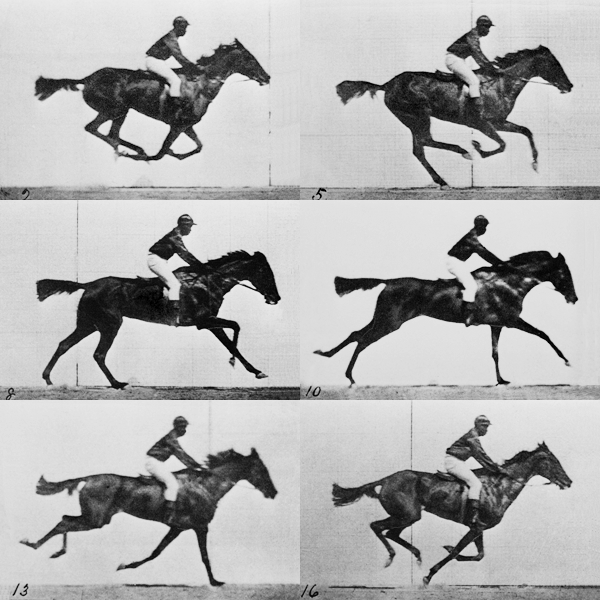
Eadweard Muybridge |
Entry for July 31st
Today's race-for-the-bones activity made me remember how powerful physical activity is, and how it can positively impact learning.
My experiences in elementary school with exercise were very traditional: hopscotch, tetherball, baseball, basketball. I am glad to hear that in some high schools, students are getting a chance to do things like pilates, dance, and yoga. Learning ways of moving that they can use all of their lives seems like one way to really serve the students in a meaningful way.
The skeleton activity was brief, but was enough to blow the cobwebs out of my brain, like hitting the "refresh" button. The fact that there are so many possibilities to combine movement with science or math, or really anything, is one reason why I wanted to become a teacher. Working with kids doing visual and performing arts and combining these with other subject areas like social studies showed me some of the potential for creativity in learning and teaching.
Sunday, July 28, 2013
July 25th post for Health and Fitness
An idea from today’s class that really interested me is
using a concept map to represent information, and the way it shows how bits of
information can be linked. It was challenging to put it all together, and
raised some questions for me. I am now wondering about different ways concept
maps might be used by teachers for teaching, and by students for learning. It
makes me want to find interesting examples of how the visuals and the content can
connect with each other.
I can see how dividing up information into discrete chunks
for the concept map allows you to see it with a fresh perspective. I think figuring
out how the chunks can be organized and linked forces a focused sorting process
of those chunks.
Tuesday, May 28, 2013
Listening for silence
| NASA researchers conducting tests on aircraft engine noise in 1967
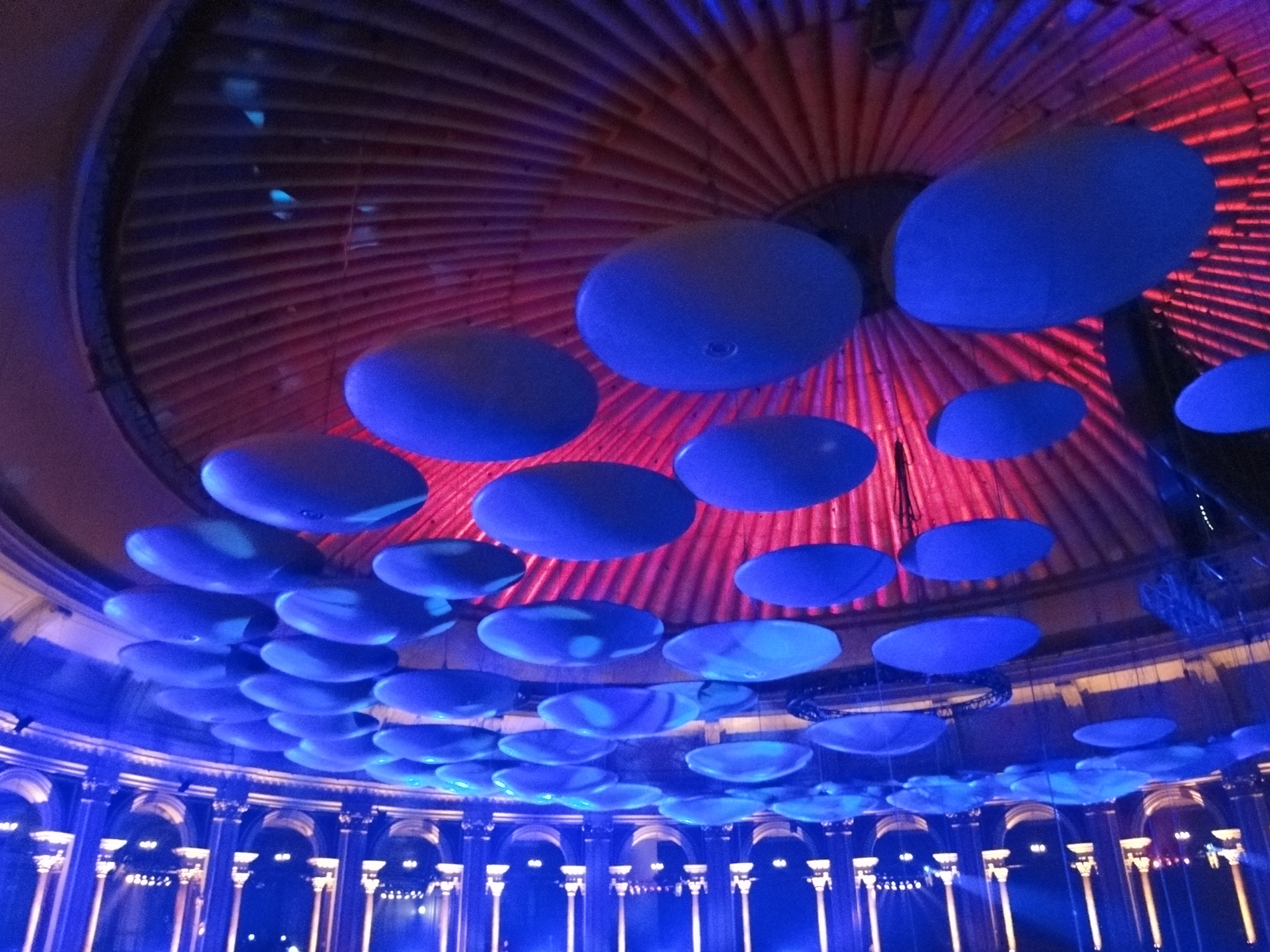
As we think about what kind of spaces where we will work with kids, I am thinking about the different qualities of sound. This year, the classroom where I volunteer shares a wall with a special needs classroom. Although sometimes shouts and other sounds come through the wall, the children I work with have become used to the sounds for the most part. I think they have gained some comfort with this proximity to these sounds through visiting the class at times and doing activities with both classes together. The special needs kids and "gen ed" kids know each other to some extent, which is good for everybody.
When I have had students who will be using their voices in performance, I do different listening experiments with them. I have them say words or phrases in different ways and at different volumes. Then I have them start listening to "negative space,"i.e., what it sounds like immediately after making a sound. Of course, there are echoes and ambient noise that most kids would not have noticed previously. But there are also subtleties in the transitions from noise to noise, or noise to "silence." For example, some kids experience the silence following a loud sound as spreading outward from a central point in the room, filling the room. I have kids think about these things for several reasons. There is so much to be learned by noticing your surroundings while engaging with your senses. We can also connect emotions to sound. When possible, I start a project with a quiet activity like painting, and I play music that is meditative but also has steady energy. Later we talk about how they felt during the activity, and why they think they were affected that way by the activity and the music.
Because children's lives are so full of noise and stimulation, we can also bring that into the discussion. How do they feel the moment after they have ended a video game? How do they feel when they are riding in a car? What ambient sounds are in their homes? Are there any sounds in their lives that will be memorable and emotional for them when they are adults? What's the quietest place they've ever been? (Mine is in a shop that sells all kinds of foam, located in the U-District. I challenge anyone to beat this example for silence.) What is the noisiest place they've ever been? I might ask them that next time they're in a quiet or noisy setting, to try to hear as many individual sounds within it as they can.
I feel these kinds of exercises help kids feel more connected to the places where they work, play and perform, and they enrich their experience when they are in these places. In the Choices, Choices, Choices blog post, she describes the benefits to kids of being able to chose where to work in their classroom. I can picture including small, one-person or two-person sitting "nests," making them out of foam with three walls to surround the student(s). The reason it would be small is that the noise-absorbing foam would be pretty close to the ears of whoever was in the pod, and I bet it would be noticeably quieter than the rest of the room. It would be nice to let kids experiment in making such spots to be in, also.
|
Subscribe to:
Posts (Atom)